Location Scouting

Whether you are photographing people, cars, or the scenery itself, finding the perfect place for your shoot is without a doubt of the most important considerations that will ultimately affect the final results.

For some people, it may be difficult to spare the time to head out on a mission to find great places to shoot, however there are a few things that you can do to make this task a little easier whenever you’re ready to pack your camera and hit the road.

There are usually two scenarios:

1) A location is provided for you

2) You have to find a location yourself

In the first case, where a location is provided, depending on the size of the area, I will take as much time necessary to do a walk through.

During the walk through, I try to figure out a convenient and productive path that I will take (usually with people, or a photo crew).

I make notes of all the spots I think we can stop at, and in the end, I will chart out the easiest and simplest course with considerations to any time limits.

In other words, I will try to make a course that will be easy to walk through, will keep everyone from getting bored or tired, and if the shoot is scheduled to be 90mins, I won’t go to a spot that takes 40mins to get to or else it will take away from all the other shots we could get.

I will usually scout with my cell phone, taking snapshots of every notable area, and at the end review what I have and decide what to do from there.

In the event where you have to find a spot, a good start is to first think of the photo/video shoot.

What is the theme of the shoot?

What wardrobe/clothing/accessories are available?

Does the time of day/sunlight matter?

These are just a few questions you may ask yourself, and you may or may not have an answer.

Regardless, with any details you have pre-determined you can then select your location to complement every other element in the shoot.

One thing I personally do is I will take cell phone photos of places I naturally go to in my daily travels.

I take photos of places I think will be great shoot locations, and simply keep a folder with these images in it renamed to the major intersection that it’s closest to so I can easily remember where it is.

Whenever the opportunity arrives and I have to provide a location. I access my folder and see if there is anything in there that can help.

Location scouting can also sometimes be an urgent matter, and you have to come up with a place ASAP, or even in a city or town that you have never been to. What then?

For this I take on technology and use Google Maps and Streetview to help find areas that could potentially host a photo shoot then the day of take a walk through 1 hour before the actual photo shoot begins.

Location scouting can be a major contributor to great digital imaging. Find the right place and your work will come to life!

Photography exposure – Using the water in a bucket theory

Clear your mind and imagine this. It’s a challenge. To start things out, imagine you have a water faucet. There is a hose attached to the faucet. At the other end of the hose, there is a bucket.

When you open the faucet, water flows through the hose and into the bucket.

Once the bucket is filled to the top, you successfully complete the challenge.

You fail if the bucket that overflows or if the bucket isn’t filled up.

Simple. Right? And it definitely would be, but imagine that you had to do this with your eyes closed.

You couldn’t visually see the bucket filling, and instead you had to give instructions to a machine that would do it for you.


Now you may ask yourself:

How long should I keep the faucet open for enough water to flow through and fill up the bucket?

How fast is the water flowing? Water that flows faster is sure to fill the bucket faster.

How big is the hose? A bigger hose would be able to deliver more water.

How big is the bucket? A smaller bucket will be full sooner than a bigger one.

All of these are valid questions, and with a few tries you might actually fill the bucket to the brim!

But believe it or not, this concept of filling a bucket with water is, in one way, how you should think about photography as you balance your shutter speed, aperture, and ISO so that you get a photo is isn’t too dark and isn’t too bright/washed out.

In photography, we don’t deal with streams of water. We deal with rays of light.

This, in photographic terms is called: EXPOSURE.

How will you EXPOSE the film or the sensor in your digital camera to light?

How long? How much? How big is the “bucket” that you need to fill?

In the water/faucet analogy, think of this when you compare to your camera

How long you open the faucet for = Shutter speed

How wide the hose is = Aperture

How big the bucket is = ISO

How strong the water pressure is flowing out of the faucet = The strength of your light source

Sometimes you will have the power to control all of these factors. You will be able to choose whatever shutter speed you want, the aperture, the ISO and your light source.

This is typically a studio situation.

Other times, you will only be able to control a few of these, for example if you are shooting outside. The sun (or stars) will provide light for you, and you have to adjust the other three to compensate so that you “fill the bucket” .

You may keep the shutter open for a split second when the sun is bright, or you may keep it open for a while as the trace amounts of light can trickle into the camera when shooting at night.

An important thing to note is that adjusting your shutter speed, apeture, and ISO has an effect on how the final image looks, and I dive further into it in their own dedicated tutorials.

Just remember, the water in a bucket analogy is just one part of photography, that I feel is something every person learning this craft should know and apply.

Batting Cage

It isn’t always about work. Sometimes you got to take a break, like swinging at 85mph fastballs (No cell phones were harmed in the making of this video)

Whistler

No doubt, one of the most memorable moments of my life.

I have always heard of the legendary Whistler-Blackcomb mountain in British Columbia. I have seen photos or snow capped peaks, and even dreamed of making it out there “one day”.

It was in 2014, I was contracted to do a commercial promo video that required “Amazing, jaw dropping, Canadian footage” and to top things off, production was to take place in BC.

There was no thought of where I wanted to go to capture such imagery.

The drive up from Vancouver was incredible and breath taking in itself. Arriving there, however, was a whole different experience.

To stand at the foot of these two mammoth mountains surrounded by chalet-style buildings in the skiiers village  was a moment I where I just stood by and absorbed.

The ride of the gondola, was also an adventure to take in.

Here is a video I captured with my phone in the glass covered vessel traveling high into the sky

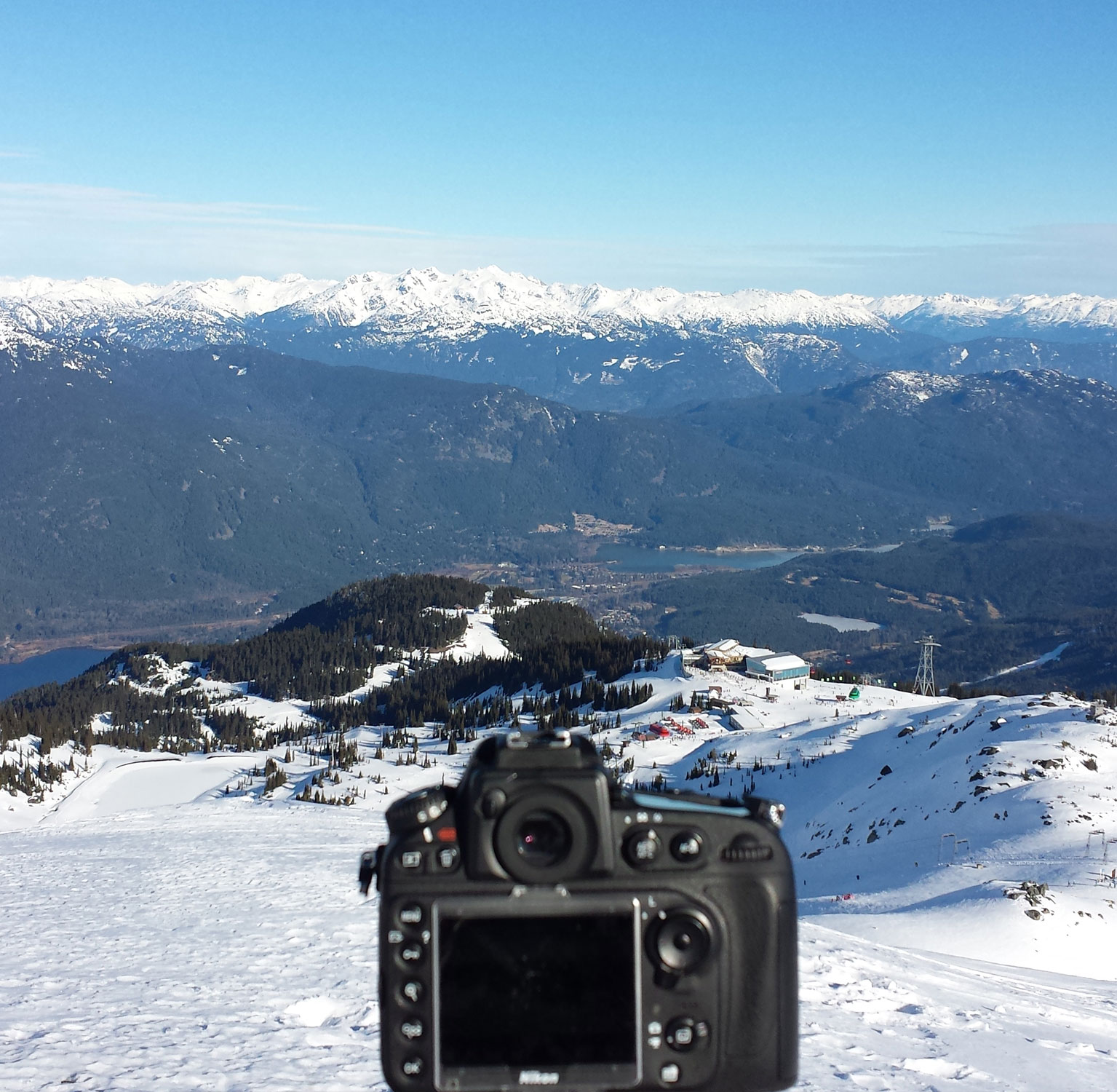
After the gondola ride up to the Roundhouse, I climbed up some more by foot and found a higher peak where I set up my camera to take some photos.

There was nothing but the sky above and the world below.

A moment I will never forget.

Decade

It was sometime in 2004 when I first met this couple. They were friends of the family, and I spent some time with them at social gatherings.

They hired me to create their wedding video a year later.

The day was memorable, but shortly after, life took us in different directions.

Time passes so fast. But wouldn’t you know that after 10 years of marriage, this same couple contacted me to see if I would like to capture a photo of the family they now had.

I took them to one of my favourite spots, and this is the one I think will march on with them as more years and decades pass.